Five Clauses Between Your Data and Someone Else's Model

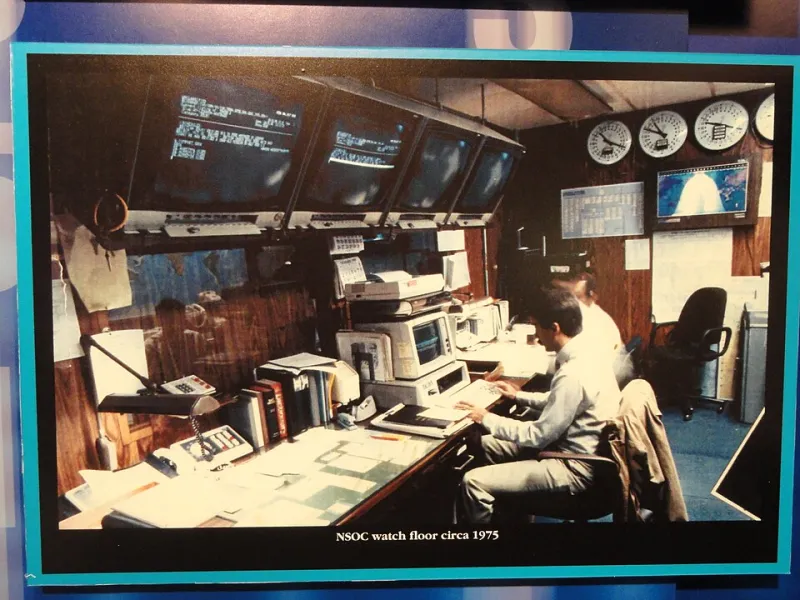
Photo: U.S. Space Force SBD1 by Tiana Williams, Public domain, via Wikimedia Commons
An AI addendum typically arrives as an exhibit to a subscription agreement that has already cleared procurement, security review, and pricing. Because it comes late and reads like boilerplate, it is often initialed without negotiation. That is a mistake with a long tail. A privacy policy answers the regulator's question about what categories of data a vendor collects. The addendum answers the far more operational question of what the vendor may do with the data your business runs on — and the two documents frequently diverge.
Treat AI procurement as a contract-design exercise rather than a compliance checkbox. Controls and security questionnaires describe the service as it exists on signing day. The addendum is the only instrument that continues to govern when the model is retrained, replaced, or retired.
Map the Data Before You Read the Terms
Negotiation goes badly when counsel reviews the addendum in isolation. Pull the data flow first: what prompts and documents employees submit, what the system logs, what feedback ratings and edit histories are captured, what the vendor receives through connectors and retrieval layers, and what leaves the environment as output. Each stream carries a different risk and deserves a different term. A support chatbot and a contract-analysis tool trained on privileged drafts should not be governed by the same sentence.
Once the streams sit on a single page, the five terms below stop being abstract.
Term One: What May Be Learned From Your Inputs
Service-improvement language is where most review stops, and it should not be. Three questions separate a defensible clause from a permissive one.
First, is the permission limited to operating and maintaining the service, or does it extend to training, fine-tuning, and evaluating models? Those are distinct activities and should be named separately. Second, who decides whether your data is in scope — a contractual opt-out, or a settings toggle an administrator can reintroduce during a product update? Only the former is durable. Third, does the permission survive termination as a residual right? Vendors sometimes retain the right to use information learned from your data indefinitely, and that sentence can outlast the relationship by years.
Aggregation and de-identification are not automatic safe harbors either. Ask what standard applies, who certifies it, and whether re-identification is permitted for any purpose.
Term Two: Who Owns What Comes Out
Outputs generated from your prompts and data should be assigned to you expressly, with a matching waiver of vendor claims. Watch for the quiet reservation: a license back to the vendor permitting use of outputs to train or improve its models converts your work product into its training corpus.
Two US-specific points deserve attention. Output ownership is not the same as copyrightability; human-authorship requirements mean a generated draft may not be protectable at all, so the warranty worth negotiating is one of non-infringement and quiet enjoyment rather than ownership alone. Second, outputs that resemble third-party material create exposure that lands on you unless the indemnity is drafted to cover it.
Term Three: What Happens When the Model Is Retired
Every AI relationship is a relationship with a version of a thing that will change. Address change directly. Pin the deployed model version in an exhibit. Define material change — retraining on a different corpus, a shift in evaluation results, a move to a new hosting region or subprocessor — and require advance notice with a right to re-test before the change takes effect.
Then negotiate the exit: migration assistance, a defined wind-down period, export of your data and configurations in a usable format, and a termination right if the replacement materially degrades performance or alters the data-use terms. Deprecation clauses that promise notice but supply no remedy are announcements of a problem, not solutions to one.
Term Four: Indemnity With a Perimeter
AI indemnities are frequently drafted at a level of generality that reads well in a sales presentation and collapses in a dispute. Insist on specificity. The vendor should defend third-party claims that outputs infringe intellectual property, and the carve-outs should be narrow and objectively defined — customer data, prompts, unauthorized modifications, and use outside the documentation are the usual candidates. Confirm whether the indemnity survives model deprecation, whether insurance backs it, and which cap applies. A general liability cap applied to an IP indemnity rarely reflects the exposure.
Term Five: The Right to Look Inside
Audit rights in AI contracts tend to collapse into a certification report and a link to a trust center. That is a start, not a substitute. Ask for annual SOC 2 Type II reports, summaries of penetration testing, the vendor's evaluation methodology and results for the deployed model, a category-level description of training-data sources, and a commitment to cooperate with regulator inquiries touching your data.
Flow-down matters as much as the right itself. If subprocessors and upstream model providers sit beneath the vendor, your audit right should reach them contractually, and your notice rights should trigger when they change.
Where the Addendum Usually Fails
Three drafting habits cause most of the trouble. The first is defining critical terms in the master agreement and referencing them loosely in the addendum, which lets the vendor argue that a broader legacy definition still controls. The second is silence on order of precedence when the addendum, the acceptable use policy, and the technical documentation conflict. The third is a change-of-control clause that lets an acquirer of the vendor assume the contract while the data-use terms quietly travel with it.
A Sequence for the Negotiation
If leverage is finite, spend it in order: training-data scope, output assignment and the license-back, deprecation notice and exit, indemnity, then audit. Everything else is worth trading.
The test of a well-designed addendum is simple. Read it as though the model has already been replaced twice and the vendor has been acquired once. If the sentences still do what you need, you have designed a contract rather than signed a policy.